Coding Is the Easy Part
Every software project starts with an idea.
Someone has a business problem. A product concept. A workflow that needs improvement. An opportunity to build something better.
Then comes the obvious question: “Can we develop it?”
In today's world, the answer is often yes.
There are programming languages, frameworks, AI coding tools, cloud platforms and countless libraries that can help developers build applications faster than ever.
But writing code is only one part of software development.
The real challenge begins when the software needs to grow, change, integrate and survive for years. A developer can write code that works today. A strong engineering team builds software that continues to work tomorrow.
That's the difference between simply coding and true software engineering.
From “It Works” to “It Scales”
A small application may work perfectly with 100 users.
What happens when there are 10,000?
What happens when the business expands into another country?
What happens when another system needs to integrate with it?
What happens when five developers become 50?
What happens when the person who wrote a critical module leaves the company?
These are architecture questions — not syntax questions.
Good software development therefore needs to consider:
Scalability
Performance
Security
Maintainability
Reliability
Integration
Testing
Deployment
Future changes
The goal isn't simply to make software work. The goal is to make software that can keep working as everything around it changes.
Clean Code: Building Software People Can Understand
One of the most underestimated aspects of software development is code quality.
Code is not written only for computers.
It is also written for other developers.
A piece of software may be maintained by dozens of engineers over its lifetime. If the code is difficult to understand, every future change becomes more expensive and risky.
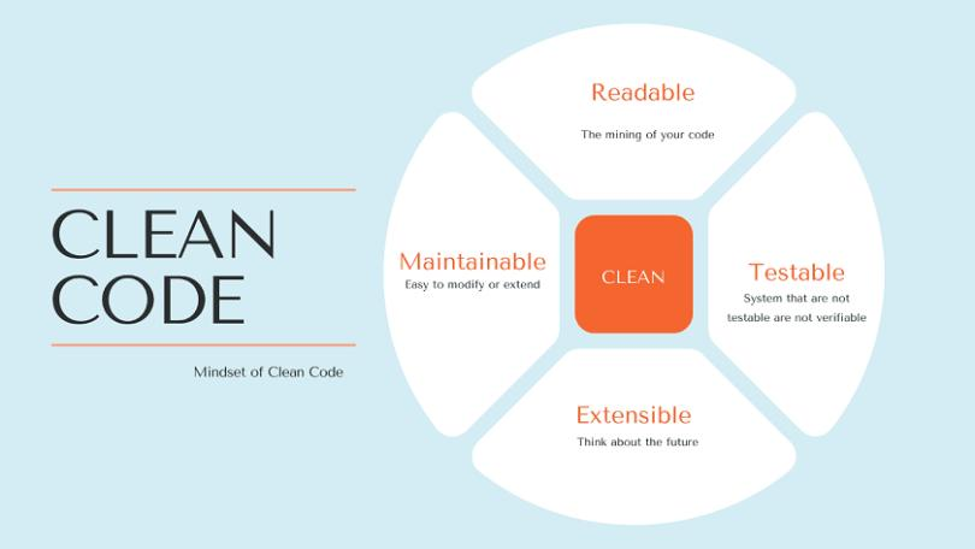
Clean code aims to make software:
Easy to read
Easy to understand
Easy to test
Easy to modify
Easy to debug
This means using meaningful names, sensible structures, clear functions, consistent standards and appropriate documentation.
It also means avoiding unnecessary complexity.
Good code should explain itself as much as possible.
Technical Debt: The Cost of “We'll Fix It Later”
Sometimes developers take shortcuts to meet a deadline.
The feature works. The client is happy. The release goes live. But underneath, the system may be accumulating technical debt.
Technical debt can appear as:
Duplicated code
Poor architecture
Missing tests
Temporary workarounds
Hard-coded business rules
Outdated dependencies
Inconsistent coding practices
Like financial debt, technical debt isn't always immediately harmful. But it becomes expensive when it keeps growing. Eventually, adding a small feature can require changes across multiple parts of the system. That's when development slows down and the risk of defects increases.
The cheapest bug to fix is usually the one prevented during development.
Agile Is More Than Daily Stand-Ups
Agile development is often misunderstood as simply having daily meetings and working in sprints. It's much more than that.
True Agile development is about creating a feedback loop:
Build → Test → Learn → Improve → Repeat
Instead of spending months developing something based on assumptions, teams continuously validate whether what they're building actually solves the user's problem.
A mature Agile team focuses on:
Clear priorities
Short development cycles
Frequent releases
Continuous feedback
Collaboration
Transparency
Continuous improvement
Agile doesn't mean “develop faster at any cost.” It means “learn faster and deliver value continuously.”
Why Testing Cannot Be an Afterthought

One of the biggest mistakes in software development is treating testing as something that happens at the end.
A typical process may look like:
Develop → Finish → Test → Find Problems → Fix → Test Again
This can create delays, especially when defects are discovered late.
Modern engineering teams increasingly integrate testing throughout the development lifecycle.
Developers write code.
Automated tests verify it.
QA engineers challenge it.
CI/CD pipelines validate it.
Users provide feedback.
Testing becomes part of development — not a final checkpoint.
Zero-Defect Delivery: A Mindset, Not a Promise
No complex software system can realistically promise that absolutely no defect will ever exist.
But zero-defect delivery can be an engineering mindset.
It means teams don't treat defects as an unavoidable part of software development.
Instead, they focus on preventing defects through:
Clear requirements
Good architecture
Clean coding practices
Peer code reviews
Automated testing
Continuous integration
Security checks
Performance testing
Monitoring and feedback
Launch Date vs. Long-Term Value

Meeting a launch date feels like success.
And sometimes, it is. But what happens after launch?
If every new feature becomes increasingly difficult to develop, the original launch date doesn't mean much.
A successful software product should be evaluated by more than: “Did we launch on time?”
It should also be evaluated by:
How easily can we add new features?
How stable is the system?
How quickly can we identify defects?
How easy is it to onboard new developers?
How well does it perform as users increase?
How expensive is maintenance?
How safely can we release changes?
A successful launch is a milestone. Maintainability is the long-term victory.
Architecture Is Where the Real Engineering Happens
A scalable software product starts with thoughtful architecture.
Architecture determines how different components interact and how easily the system can evolve.
Depending on the product, teams may consider:
Modular architecture
Microservices
APIs
Cloud infrastructure
Database architecture
Caching
Queuing
Security layers
Observability
Disaster recovery
Not every project needs a complicated architecture.
In fact, over-engineering can be just as harmful as under-engineering.
The right architecture is one that fits the product's current needs while leaving room for sensible growth.
Final Thoughts
Technology changes quickly. Programming languages evolve. Frameworks come and go. Development tools become obsolete.
But some principles remain constant:
· Good architecture matters.
· Clean code matters.
· Testing matters.
· Maintainability matters.
· Quality matters.
Because ultimately, software isn't valuable simply because it works on launch day.
It's valuable because it continues to create value long after launch day.
Talk to Skylark about building software designed not just to launch—but to last.