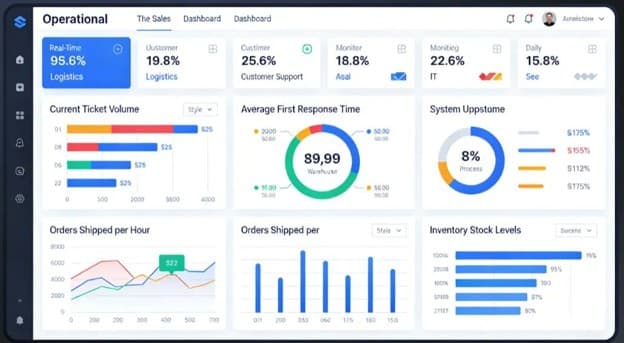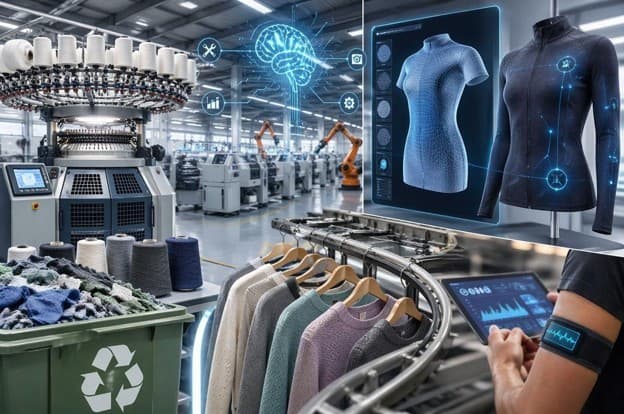
From Digital Factory to Intelligent Factory
The next stage of digital transformation is not simply collecting more data.
It is using that data to predict, recommend and automate decisions.
This is where artificial intelligence and advanced analytics become increasingly valuable.
The journey can be viewed as:
Manual → Digital → Connected → Analytical → Predictive → Intelligent
How AI Can Help Textile Manufacturers
AI can potentially support many areas of textile manufacturing, including:
Production forecasting
Demand forecasting
Predictive maintenance
Quality anomaly detection
Inventory forecasting
Order delay prediction
Workforce analytics
Cost analysis
Automated management reporting
For example, instead of simply showing that an order is behind schedule, an intelligent system could identify the reasons and flag the order as a potential delivery risk.
That's a significant shift in how management works.
Predictive Maintenance
Machine breakdowns can have a major impact on production schedules.
AI-powered analytics can examine machine performance and historical breakdown patterns to identify unusual behavior.
Instead of waiting for:
Breakdown → Production Loss → Emergency Maintenance
factories can move toward:
Early Warning → Planned Maintenance → Reduced Downtime
This can improve machine availability while reducing unexpected production interruptions.
AI-Powered Management Insights
Imagine a factory manager receiving a morning summary:
Three orders require attention today. One production line is underperforming. Machine downtime increased yesterday, and a material shortage may affect an upcoming order.
Instead of reviewing multiple spreadsheets and reports, management gets a concise view of the issues that require attention.
This is where AI can become a practical management tool—not simply a technology trend.
A Practical Roadmap for Textile Factories
Factories don't need to implement AI immediately.
A practical roadmap is:
1. Digitize
Replace manual and paper-based processes.
2. Connect
Integrate production, inventory, HR, quality, maintenance and merchandising data.
3. Measure
Define and monitor meaningful KPIs.
4. Analyze
Use dashboards and analytics to understand performance.
5. Predict
Introduce predictive maintenance, forecasting and risk analysis.
6. Optimize
Use AI and automation to continuously improve operations.
The important thing is to build a strong foundation before moving to advanced technology.
Why This Matters for Bangladesh
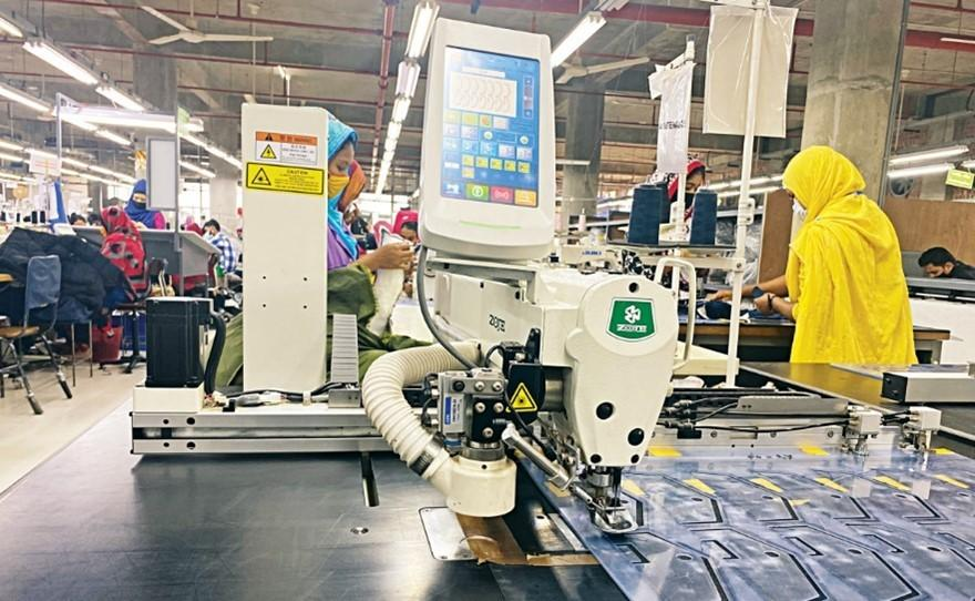
Bangladesh's textile and garment industry operates in an increasingly competitive global market.
Buyers expect:
Consistent quality
Competitive pricing
Reliable delivery
Transparency
Operational efficiency
Better compliance
Digital transformation can help factories improve productivity, reduce waste, identify problems earlier and make better use of resources.
The factories that can turn operational data into better decisions will be better positioned to compete.
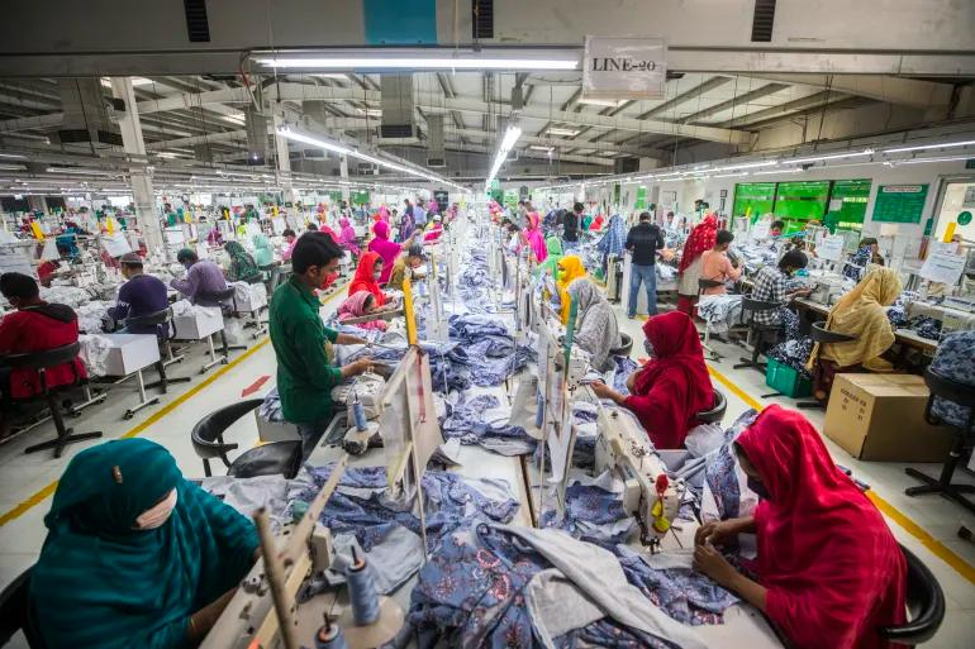
Start Small, Build for the Future
Becoming a data-driven factory doesn't require transforming everything at once.
A factory can start with:
One process.
One production line.
One KPI.
One problem.
Digitize it.
Measure it.
Analyze it.
Improve it.
Then expand.
The goal isn't to create a perfect smart factory overnight.
It is to create a culture of continuous, measurable improvement.
The Intelligent Factory Is Already Taking Shape
The factory of the future will connect:
Production + Quality + Inventory + HR + Maintenance + Merchandising + Management
Data will flow across the organization, giving decision-makers a clearer picture of what is happening and where action is required.
The ultimate objective is simple:
Know what is happening. Understand why. Predict what could happen next. Act early.
That's the promise of a data-driven textile factory.
How Skylark Can Help
At Skylark, we understand that textile and garment businesses need technology designed around their actual operations.
Our textile-focused ERP and digital solutions can help businesses connect information across merchandising, production, inventory, HR, costing and business operations—creating the foundation for better analytics and smarter decision-making.
Whether your factory is taking its first steps toward digital transformation or preparing for advanced analytics and AI, the journey starts with getting the right data into the right hands.
Connect Your Operations. Track What Matters. Make Better Decisions.
Talk to Skylark about building your data-driven textile operation.